Fatherly Traces Left Behind

My dad’s ashes were scattered a few nautical miles off shore by a lighthouse, with some seals looking on with curious interest from a nearby rock. “Make sure you do it with the wind blowing away from you” he had joked. The idea of not being eternally stuck in one place appealed to him, and so my youngest son held the urn snugly in his lap as the open hulled wooden boat made it’s way out to the spot my dad, my sister and I had agreed on. On a day with blue skies and low winds, my dad’s fisherman friend had offered to be the captain and take us out on his traditional fishing boat with room for ten on benches lining the bulwark. We tried to remember my dad’s advice about the wind, but some of the fine dust still rose toward our nostrils and mouths when we gently shook the content of the urn toward the water’s surface. I didn’t mind the minute remnants of my dad clinging as they must have to my clothes and eye lashes while I helped my son and niece to have their turn scattering their grandfather’s remains in the Norwegian Sea.

He’d been living more or less off the grid after my parents’ divorce some twenty years earlier, and since I had moved to the U.S, I always regretted not having been able to spend more time with him. He was a fine man, and a kind man, although he had, until lung cancer got the best of him, smoked forty a day and could easily polish off a Johnny Walker before noon. Truth be told, he was a bit of a financial fuck-up, and his avid tax protesting and ever mounting tax debts landed him a stint in the mountains of Norway, in jail. The government always seemed to be able to find him for this or for that, despite his earnest attempts to go underground and not own anything they could take away from him. But his time, the government could still take, as they did in the summer of ’98.

When they divorced, my mom kept the apartment and the boat had been sold long time ago. The only reason he could keep his Citroen station wagon was because my mother agreed to have it registered in her name. The day he left his bourgeois life, only his clothes were stuffed into a huge duffle bag from his younger days in the army, and we helped him carry a few extra belongings in a big, black plastic garbage bag. Among them was a framed black and white photo of him as a little boy in the arms of his dad, just before the War. He later lost the content of this bag once he left it in someone’s storage space, when he was in-between having a place to live.

My dad’s story deserves to be told because he was an ordinary man who made some extraordinary choices, although I imagine he didn’t see them as optional. It was when he pulled out a Walther P38 handgun from a small cooler bag he used to carry around and waved it at some unfriendly young ruffians in an Oslo traffic jam that he acquired the nickname of Cowboy Gramps. (I was told the gun had belonged to a German officer during World War II and my dad’s friend’s father was among the Norwegian Army Officers who arrested the German and confiscated the gun when the war and the German occupation of Norway ended in 1945).  My dad was arrested on charges of carrying an unregistered weapon, and my guess is he wasn’t completely sober either.

Otherwise my dad was called Goggen among his friends, short for George, which was his middle name, his first being Roar, a traditional Norwegian name.

A bootlegger, tax-protester and everybody’s token outsider, he was an autodidact and passionate reader who was always interested in the Other’s story and would look you in the eyes and give a great handshake. He taught me how to press a shirt and how to make Béchamel, that creamy white herb infused sauce, and how to tie a scaffold knot and a cow hitch. He was equal parts the worst and the best for a role model, but most of all he was just a man who adored his two daughters and not much else. His uncompromising love for us is about the only trace he left, and some great friendships. That and a few good stories is by far the best anyone could wish for.

Today would have been his 80th birthday.

Happy Fun Season! Surprises on Tax Day

It’s that time of year again, and I just got lucky. Picking up my tax return I learned that contrary to the serious checks I expected to have to have postmarked today, my payment is less. Much less. Well then. How’s that for a belated Hanukkah gift? At least it’s an event shrouded in a cloud akin to a miracle for me. I love miracles. And my tax guy.

I’m a self diagnosed “tax trauma survivor, ” since my dad was a notorious tax evader. Honestly, he was more of a tax protester, and even did some time in the mountains of Norway for “white collar crime” in a place we came to call his summer camp. He took it in stride as the service at the open-door facility was excellent, his laundry was done and folded, they asked he if wanted fish or pasta for dinner and he was sent home on leave every third weekend with spending money in his pocket. Really.

But my mom didn’t take that brief episode of incarceration with the same lightheartedness. Who can blame her? For her it was the end of the rope of a lifelong accumulation of poor financial decisions on my dad’s part. I actually think he had some kind of traumatic childhood experience that translated into his visceral revulsion of all things “authority,” like the heavily taxing socialist state of post WWII Norway or the uniform clad Norwegian parking guards that take their job a wee bit too seriously issuing tickets when you are parked one meter too close to the corner. His sort of “PTSD,” I believe, may have had its roots in his childhood memory of the Nazis who had occupied Norway. For, when he was a little boy his father was imprisoned by the Germans (or the collaborating Norwegian police) for trafficking documents for the resistance in his taxi. When my dad, a mere 7 year old boy, made the trek with his mom to the prison camp to see him, they were denied entry. I imagine the guard wore a uniform. I imagine he was Norwegian, working for the government. You don’t need to be Freud to connect the dots here.

My father’s childhood trauma and adult behavior subsequently morphed into a sever form of numbers dyslexia in his offspring: me. When I look at numbers, budgets, or bills, things get blurry and I hide the piece of paper in a growing pile on my kitchen counter, thinking my need to attend to it will be go away. The only numbers I seem to be able to deal with only go as high as the overdue fines from the library, and even those I count in Norwegian, like a kid in nursery school counting the ducklings on the cardboard book page. They don’t go much higher than 10. Yes, it’s that serious.

I’m guessing my subconscious reason for having fallen for a man with a compulsive tendency of making sure every dollar and cent were accounted for is obvious by now.

My own little family her in the USA dubbed April 15th the beginning of Fun Season, because my ex-husband is an accountant and the arrival of this much anticipated date meant a new kind of life for us. The kids and I would hang a huge home made sign on our fence announcing “Happy Fun Season, Pappa!” as he would roll in at half mast after the post office had closed, the balloons tied to the fence at the beginning of our driveway bouncing, like the children, with anticipation in the promising April air.

Like my dad, when I fall into some extra cash I immediately find fun ways to spend it. Why add them to the retirement fund when life is happening here and now, he would have said. So after I dutifully cut my modest tax payment checks to the IRS and wondered if I should hug my tax guy, but seeing as he was unavailable for tactile customer appreciation, I instead treated myself to some sushi and a cold beer, made a small donation to this creative and brave handicapped kid raising money on GoFundMe, and then treated my middle son to a day in Boston with his buddies.

Happy Fun Season everybody!

It's time to pay tax

The Lost Tribe

We can stop looking for the lost tribe, because I know where they are. They are right here in Connecticut, about an hour away from my house, and they bear the same last name as I. These are the people I once had a close relationship with spanning several decades, and then things changed when I got divorced from their son/brother. I’ve tried to reach out many times over the past few years, but they have made it very clear they prefer to remain lost. At least to me.

Which is a shame, because losing them has affected my family in many ways, not just me. Holidays, birthdays, life cycle events all seem a bit off without them, and there’s that awkward absence or silence, like a void. With them, the wacky chaos is gone, but so if their fun-loving effusiveness. My natural instinct to share the stories and photos, accomplishments and future dreams of my almost grown-up sons has been shut down as well. Instead, they insist on isolation.

In truth, I’m the one they would probably have preferred to get lost. At times I do feel lost, since they were my only Jewish family, aside from my three kids.

But I worked too hard to find my Tribe, and I’m not going anywhere anytime soon; all the cooky tribal matters are what attracted me in the first place. They grow on you and although some complicate your life, I’ve alway been one for choosing complex over simple, interesting over dull. As long as there’s love and compassion, which there used to be plenty of.

I know how they got lost. They found a signpost on their path that offended them, and it was pointing to me. It came with some commentary (we Jews are big on commentary) that had no added value to their journey, our journey, and because of this they took a sharp turn that led them – or was it me? – to this galut,or diaspora. Funny thing is, they don’t seem to see it that way, as an unfortunate thing; instead they continue to guard the borders and fences that keep us separated with a strong conviction. Despite my outstretched hand, carrying an olive branch, suggesting a truce and a cup of coffee. Our Tribe is known for its ability to stick to its guns, after all. That’s how we have remained distinct for the past few thousand years.

There are discussions in the Talmud among the rabbis as to whether the lost tribes will eventually be reunited. There are even proven genetic links and abundant archeological traces connecting them. These bear the names of my children, their grand-children, nephews and cousins.

It would be better if the things we have in common could unite us, rather than letting the things that make us different, stand between us.

A good friend just told me about an exciting project she learned about on a recent visit to Jerusalem. It’s called New Story Leadership, and it invites young leaders from the Arab and Jewish communities to become agents of change, using the transformative power of stories to create a new story of possibility. It’s a form of conflict resolution that involves hearing the Other’s story, legitimizing it, and then moving onward and forward with a new and possible narrative of peace, hope and transformation.

But it takes the courage of leaders who believe that such a narrative is a better one than a prevailing mood of cynicism and separation. I am willing to listen to the story of the lost tribe, to honor it and respect it. I am hopeful that someone among them may accept my invitation to look toward a different and better story-line for our family.

For the sake of the children. For the sake of ourselves.

LostTribe

Baruch Dayan ha-Emet: On Arriving Safely and Germanwings Flight 9525

I never take it for granted. Arriving at the gate safely after a flight always somehow…amazes me. I don’t get the whole “how it stays in the air” thing, even after my dad explained it to me many times when I was younger. Using a pencil and thick stock drawing paper, the kind that is soft under the weight of the led-tip and depresses ever so slightly as his nimble hand drew the shape of the airplane wing. He would add swooshing lines symbolizing the air moving over and under the wing, so as to give me visual of how it can be that the big, massive metal bird is lifted up and stays up. Until it’s time to land. Safely. Aerodynamics, he would say.

He went through a period with a deep fear of flying too. That was when he took out a life insurance policy with my sister and I as the beneficiaries. Meanwhile he smoked two packs of Dunhills a day and could finish a Johnny Walker before noon. This fear of flying isn’t rational, we all know that.

Driving home on the highway from the airport last night after eight heavenly days in Paris, is of course much more likely to kill me. Statistics speak that truth. Being at home now, or a few blocks from home, is even more dangerous, statistically speaking. It could easily kill us.

Last night on I-95 North behind a wet windshield with streaks from crappy windshield wipers, the news about Germanwings flight 9525 sounded especially jarring. Turning the dial on the old car radio to the New York AM station with news and weather, the announcer’s voice was barely audible behind all the static and airwave interruptions. My boyfriend turned the volume up even higher. I cringed. We only heard pieces of the story: 160 dead; scattered all over the Alps; captain banging on the cockpit door. I think baruch dayan ha-emet, the Hebrew blessing recited in the face of events that cause heartache and pain…

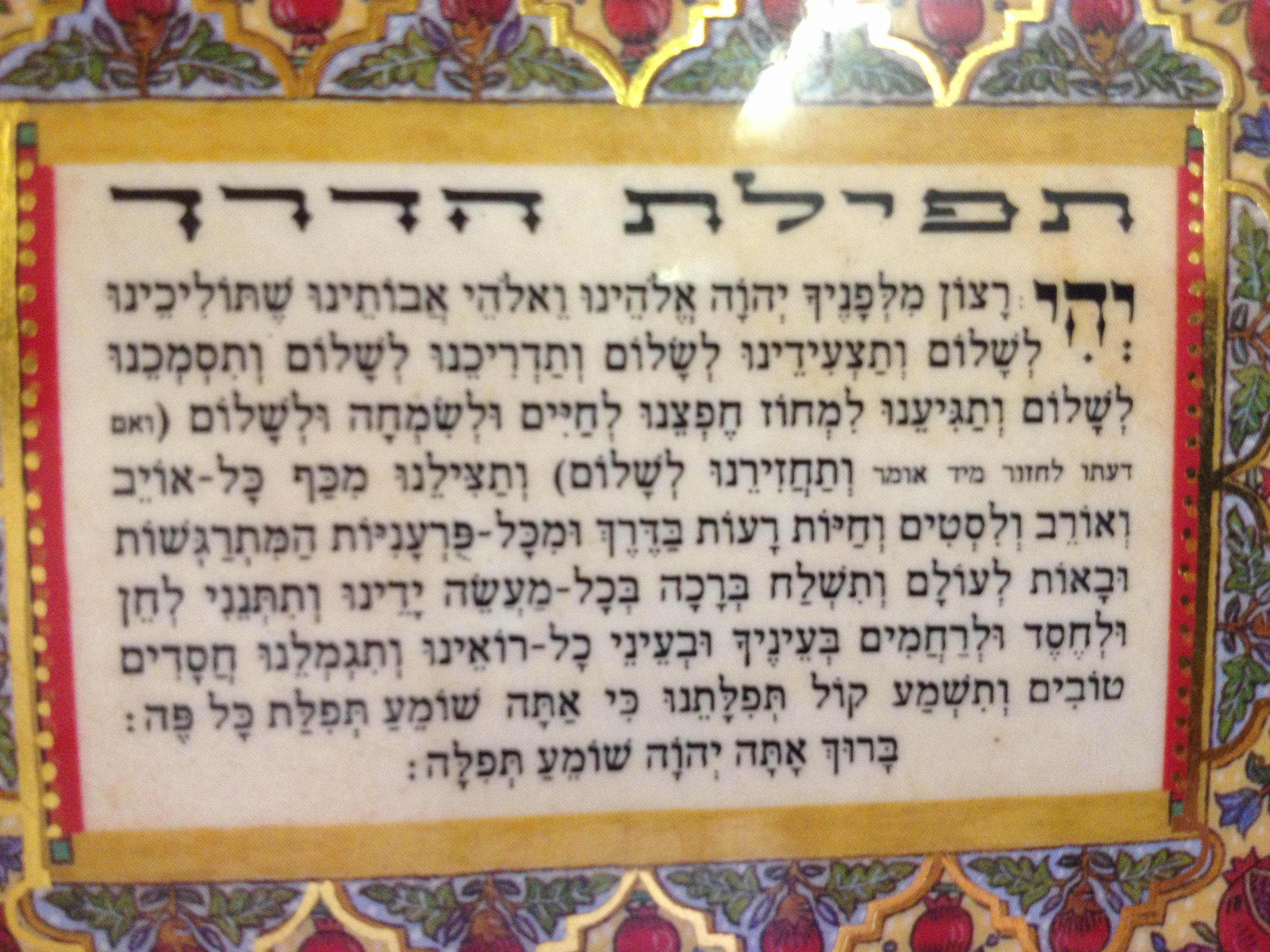
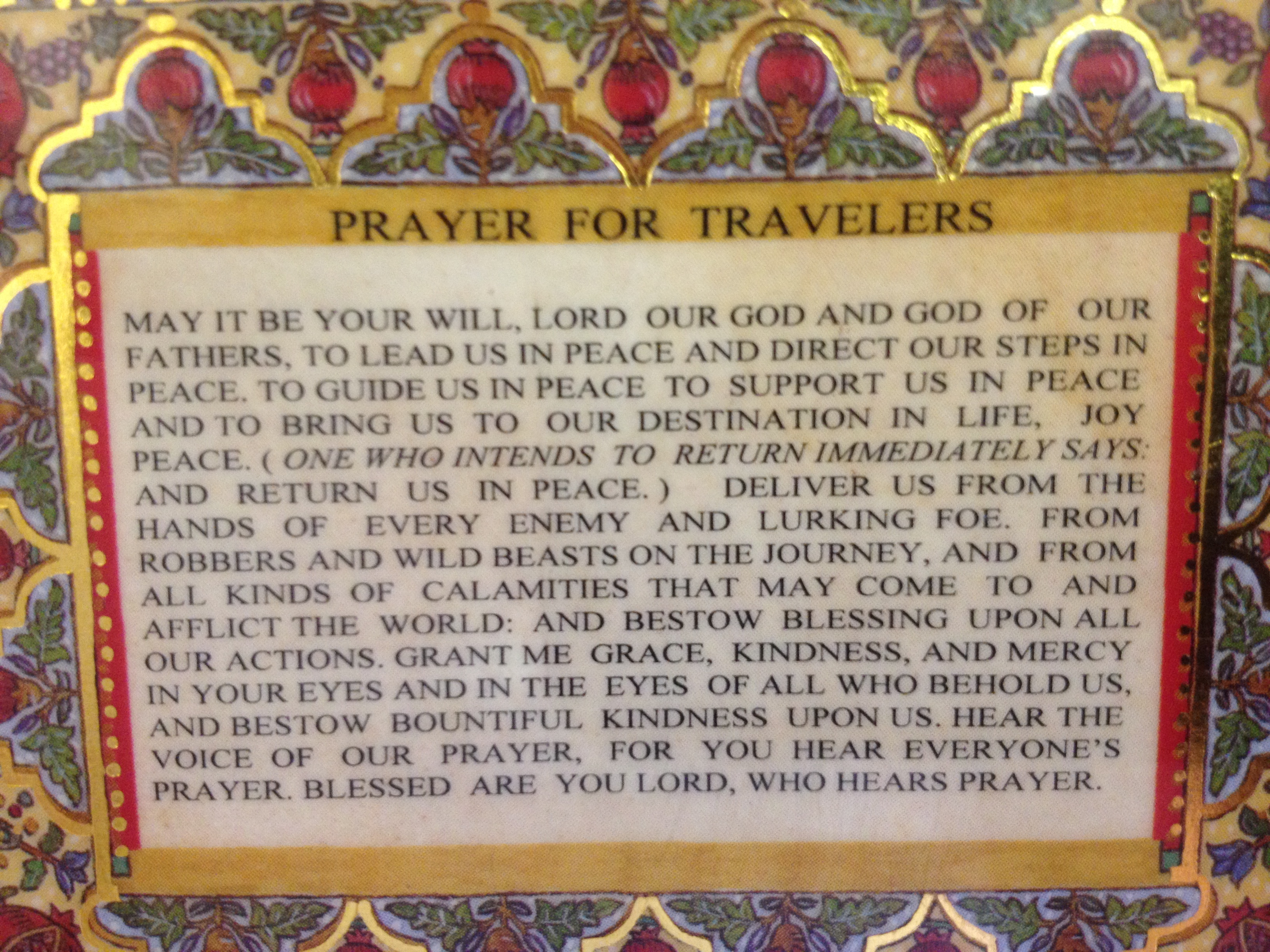
Usually, when I fly, I carry with me a small laminated card with the ancient Hebrew prayer for traveling, tefilat ha-derech. After I’m settled in my seat, as the plane begins to taxi toward the runway, I fish it out of my purse and whisper May it be your will, Lord our God, God of our fathers, to lead us in peace…to bring us to our destination in life…Deliver us from the hands of every enemy and lurking foe, from robbers and wild beasts on the journey, and from all kinds of calamities that may come…grant me grace, kindness and mercy in your eyes…blessed are you Lord who hears prayers. On this trip, I forgot the card at home. It worried me, in passing.

Words fall short in the face of tragedy and loss. May the mourners be comforted.

IMG_1462

IMG_1463

Blog-Mania!

Oops, she did it again. Write. Create. Publish. For the dedicated followers, subscribers and random readers of my blog The Viking Jewess, I want to share the exciting news of a second blog of storytelling created for and by converts to Judaism, where I am the editor: That’s Funny You Don’t Look Jewish can be found at this web address: https://thatsfunnyyoudontlookjewish.wordpress.com/

IMG_0335

The purpose of the blog is “to have a safe and creative space for converts to Judaism, regardless of their affiliation or “by whom” they were converted, to share the stories and journeys of our unique Jewish lives and experiences. We always welcome contributors to the blog, and hope to add your voice to our collection.”

Check it out! I always welcome feedback!

So there, off she goes.

No Lox on the Bagels!

Yes, when I was a young, newly honed Jewess, I had the chutzpah to make a sign for a festive brunch I was serving that said just that: No Lox on the Bagels! Little did I know then that depriving the bagel of its “lox” is akin to denying a kid candy at a bar or bat mitzvah, or holding back the Manischewitz at a bris (circumcision). Ouch.

When my ex-husband and I were young, and he was opening his first tax-office, I was in charge of preparing the food for the open house. The proud Norwegian hostess with the mostest that I am, some chips in a bowl with salsa wasn’t going to do the trick. I planned carefully ahead and used the requisite 48 hours in advance of the event to cure my own gravlaks, the delicious dill cured salmon that is, of course, a million times fresher, tastier and less salty that its popularized cousin “lox” aka smoked salmon.

There was champagne, beer and Aquavit served, as well as homemade cakes and coffee. The gravlaks was elegantly presented on a platter, with dill and lemon wedges, and mustard dill sauce on the side in a small Norwegian pewter bowl we had gotten as a wedding gift just a year or two before. To go with the gravlaks was a cold potato salad and scrambled eggs. The bagels and cream cheese somehow ambushed the party. I don’t even remember how they got there. But there they were, and I had to do what the only responsible thing was to do. Defend the honor of the gravlaks.

Of course, my valiant efforts of culinary segregation and prohibitive signage (there was actually a sign with the photo of a bagel inside a red circle with a red line through it posted next to the gravlaks) became the running joke of the entire event, and the story that survived an otherwise uneventful morning of polite chit chat and comings and goings.

Since then, I have to admit, that as my confidence has increased in all matters of life, love and letting go, I too, occasionally, put gravlaks on a bagel, schmeared with cream cheese, topped with red onions and capers. And boy is it delicious.

Bagel

One Homesick Jewess

Home as in Norway, that is.

As social media is heating up with news and discussions about the planned “Ring of Peace” outside the synagogue in Oslo on Saturday, and about the young Muslims who stand behind the seemingly positive initiative, as a Norwegian Jew I’ve had a strange day filled with many mixed feelings. But most of alI I just want to go home to Oslo and show support. Support the synagogue by showing up for Shabbat services and not let the heightened threat of terror win. Support the initiative by the Muslim youth who with their symbolic act say “If Muslims want to act with violence, they have to break through us first” as they create human shields to protect their Abrahamic brothers against hatred and violence.

It started early this morning when I was still unaware of the planned event, just the heightened tension and security measures in our Oslo shul. I started up my computer, and as usual expect to first find emails from overseas (Norway, France or Israel, my three overseas main connections) since their day already is half over by the time we wake up in the U.S. In my inbox were two letters to the members from the president of the synagogue in Oslo, Ervin Kohn. In the first, he calmly and like the loving head of a household tells the community to come together and be strong; to be brave and come to services on Shabbat despite the natural urge to huddle at home out of danger’s perceived way; to let members know there would be a warm and comforting lunch served for those who come, so that everyone can gather after services and share a meal at this emotionally laden time. That’s when I felt the first lump in my throat. How I’d love to be there with everyone.

The second letter was to share the information about the support-event planned by the Muslim youth group, and Kohn’s sincere wish that the Jewish community would show up plentiful for the evening service as well, to support their efforts, in a sense to encourage his congregants to face the Other in their attempt to show solidarity. The tiny, Jewish community in Norway is being supported publicly not by a politician with an agenda to win a seat in the Parliment, but by Muslim youth who represent a vocal part of both youth and popular culture especially as it takes on its own often boisterous life on various social media platforms. I’d like to be there and meet them face to face and say, thank you for standing up for what’s right and for choosing to be a role model. I know you had a choice…

Thinking about my fellow Jews in Norway and what it must feel like to be there right now, that’s when I felt the second lump in my throat. And that’s when I began to cry.

I cried because lately I haven’t felt like going home. I cried because I have been thinking about where I’d like to be buried when I die, and “in Norway” used to be my natural response to that, but lately, with all the depressing news around what is happening to Jewish communities in Europe, I’ve thought it would be better to find a suitable place in Israel.

However, today, as I have read hundreds of comments on Norwegian social media by people of diverse backgrounds that express hope, courage, solidarity and call for dialogue and bridge-building rather than hate-speech and finger-pointing, I have second thoughts. Perhaps it is important after all that when I’m gone, even if I wasn’t always there when I lived, there’s another stone that says a Norwegian Jewess is buried here. I was here. Norway was my country, and I witnessed this time.

peaceful-things

A Silver Spoon in My Mouth

I wasn’t born with a silver spoon in my mouth, but today I began my day with one. And I like it. Why not begin every day like this, I asked myself as I loaded the dishwasher after breakfast.

I can thank my now retired hard working career woman of a mother for enabling me with this delightful early morning experience of luxury; both enjoying my oatmeal on a regular weekday with a silver spoon, and then the freedom to put it in the dishwasher. It’s not that she bequeathed me a trust fund from her earnings, nor did she suggest I never work a day for the rest of my life, as the idiom might suggest; if anything, it is from her that I have learned the value of structure, discipline and persistent effort in all of life’s undertakings, whether great or small, intimate or public. Not to mention the importance of a resilient attitude through all the requisite ups and downs.

But she (as well as my dad) did lead by example and say with so many words: Life is short, enjoy it and all you have while you can. Use your beautiful, luxurious silverware every day, and why fret and make more housework for yourself than necessary: run it in the dishwasher. While it’s being washed, go out for a walk in the park instead, smell the roses. Write your blog.

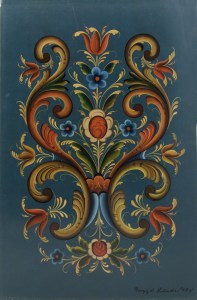
One of our few family heirlooms, my grandmother’s pure sterling silver ware has intricate curlicue carved handles inspired by the traditional rosemaling or rose painting pattern of the Telemark region in Norway (as seen below). To give an idea of its preciousness today, one table spoon is about $150; a dinner knife, $200. So for a wedding gift, you might get one knife. I inherited place settings for 8 people, including many serving pieces. Lucky me.

It was around the time of my parents’ divorce when my mom was moving to a smaller apartment and was about to retire, that I noticed her silver ware had also moved from the “special” drawer in the dining room breakfront where it had been wrapped in plastic bags and felt pouches to prevent tarnishing, to being casually placed and exposed to oxygen in her kitchen drawer. While in Oslo for a visit, she served me dinner on my day of arrival, a weekday meal of fishcakes, carrots and potatoes, using her silver. “Wow, mamma, what’s the occasion?” I asked with a wink, thinking my visit, as marked by the Norwegian flag waving form her 3rd floor balcony, might be the catalyst for the fancy cutlery. “Oh that. I’ve decided, why not enjoy it every day?” Bringing a glistening carrot neatly pierced on the tines of the Telemark silver fork to her mouth, she gave a slight shrug with her upper body suggesting she felt justified and had mostly come to terms with her own “transgression,” as if she was responding to the ghosts of generations of raised eyebrows questioning her on this and her other radical indiscretions when it comes to tradition. She might have said “Every day is a celebration! I am letting go!” but this exuberance was left for me to write later. However, it came from her. My mother.

If you are of Norwegian stock, you may have groaned in disapproval (or heard your mother in the recesses of your mind) at the mention of the silverware in the dishwasher. This is one of the great cultural taboos, suggesting perhaps my utter lack of respect for safeguarding the traditional handling of the family jewels by hand washing them. Alas, as the VikingJewess of perpetual cultural and traditional in-betweenness that I am, it is possible I have lost some of my touch with, or reverence for, one tradition as I have been hard at work learning about and safeguarding the other. While both my born Norwegian heritage and my adopted Jewish one deeply move and inspire me, I have also come to realize that life is too short to do anything to perfection. And what is that anyway, perfection? Imperfection summons curiosity and inquiry; the story is found in the flaws, lodged in there like a gift to be unwrapped and enjoyed.

Telemark rosemaling blue

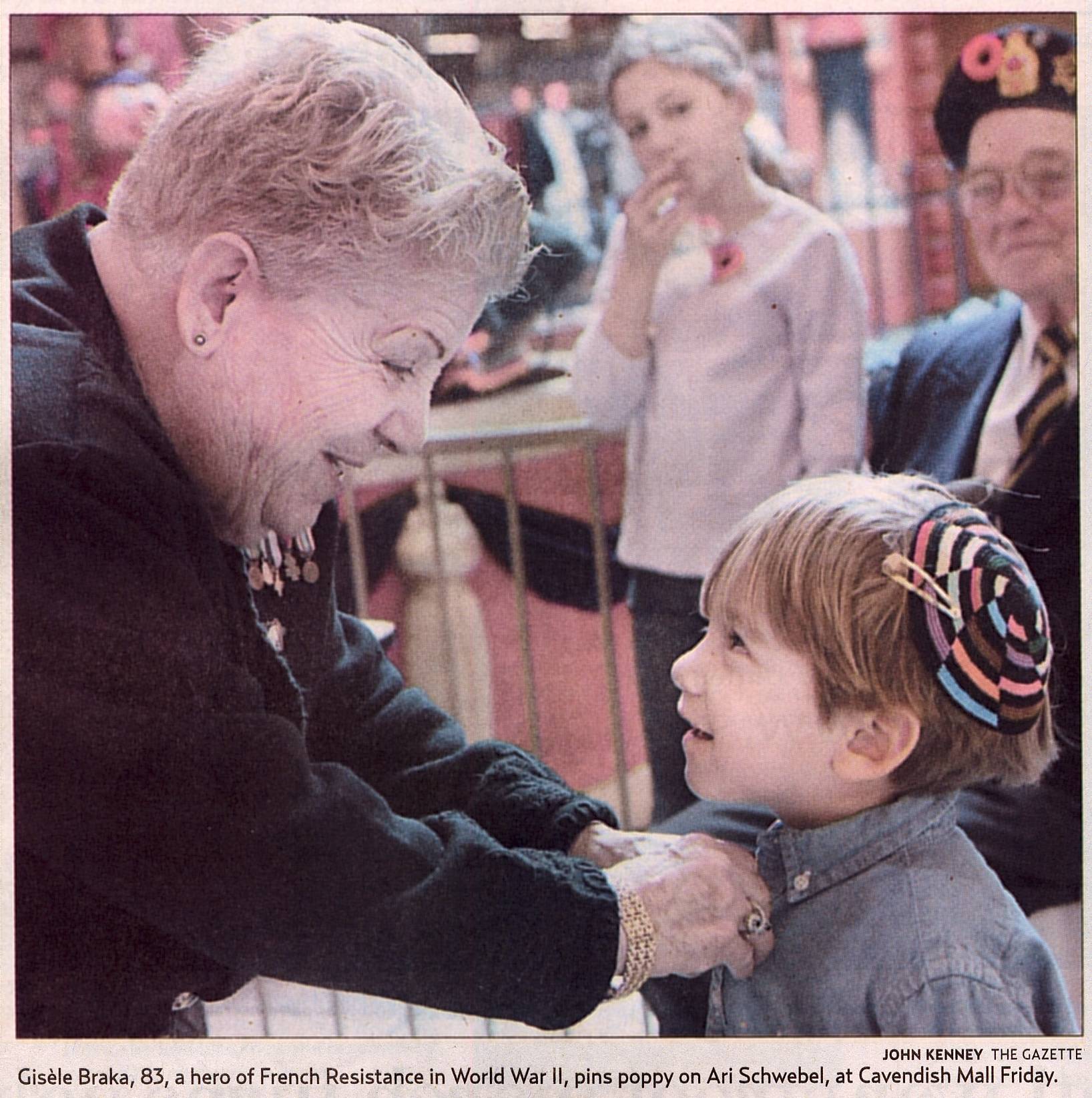
Women in the Holocaust: In Memory of Gisèle Braka (1920-2013)

This in observance of Holocaust Remembrance Day, a day late.

In 2013, I wrote this poem in Israel the morning I heard the news of Gisèle’s death. I was attending a conference on Women and the Holocaust in Israel, and my talk was about her heroic and unusual life as a Tunisian Jewish woman who joined the resistance during World War II, and experienced the war both in France and in Tunisia.

On This Day

On this day, women gathered to remember women, like you

Turning a flicker of hope, an act of kindness, a mother’s touch into a flame of eternal Memory

A humbling act indeed, for me, to name you

Hero

I shall not easily forget the twinkle in your eyes that told me you

Resisted

Persisted

Subsisted

Even after you had stopped using words, your actions spoke for you,

For your

Memory

On this day, women, young, old, and in-between, shared stories of

Survival

And even those who did not live, who do not live, who cannot live

Forever

Will always be among us now; their stories become ours as we

Resist

Persist

Subsist

Even after we stop using words, our actions will speak for us,

For our

Memory

In your

Memory

And so the flame remains eternal

On this day, you will be remembered

N.B.L., Nahariyah, Israel, March 5, 2013

20021111-MmeGiseleBraka-001

Did You Say Snow?

In honor of this snowy morning, when the state is in lockdown, and words such as “smowmageddon” and “Blizzard of 2015” are heard, I share some other words…

Ode to Snow

S-ilky, soft and silently serene
N-early Norwegian in nature and name
O-pens opportunities for other original ordeals
W-hen we walk with wonder in its wetness

S-ymbiotic sensations seize our senses
N-either numbed nor neglected, no!
O-ften only to be ostentatiously opened
W-ith windy whisks wherever we will go

S-ow, snow, see such splendid snow!
N-ow Nina knows a natural nirvana
O-h, organics of my origins, offerings I owe.
W-hen waking with wild and whimsical wishes

S-entences with snowy scenes sublimely shared

N-oticing neat nuances, never negative nonsense

O-f this other, often omitted and audacious ogre.
W-hy wail, rejoice! Winter welcomes, with wonder!

sb10066505e-001